Circular Construction

The City of New York is set to play a powerful role in decarbonizing the built environment and scaling the clean construction industry by enabling innovative solutions, facilitating bold policies, and operating programs to overcome implementation challenges.
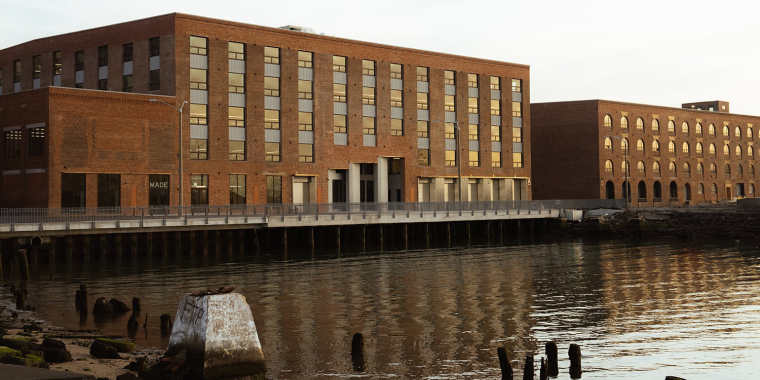
As part of the City’s decarbonization efforts, NYCEDC has established practical tools and infrastructure such as publishing and implementing the Circular Design & Construction Guidelines (CDCG), an operational toolkit to reduce waste and embodied carbon in NYC’s built environment. To further support the growth of a circular construction ecosystem, in August 2026, NYCEDC announced the launch of a year-long pilot of the Circular Construction Reuse Hub at MADE Bush Terminal in Sunset Park, Brooklyn.
Building a Circular New York City
NYC's planned carbon emission reduction
NYC aims to reduce embodied carbon emissions (those locked in place as soon as a building is constructed) for new buildings, infrastructure, and major retrofits by 50 percent by 2033 (PlaNYC 2023). Currently, materials, including their extraction, transport, and manufacturing, represent ~70 percent of all embodied carbon emissions in the built environment and construction and demolition (C&D) waste accounts for more than 60 percent of NYC’s solid waste stream.
In a linear economy, materials are extracted, made into products, and ultimately disposed of as waste. A circular economy shifts from this “take-make-waste" system and supports a more sustainable future in which materials are not wasted and are kept in their highest and best use through reuse, recycling, and planning for longevity. This approach maximizes the economic value of decisions made in design and construction while improving sustainability outcomes.
Embracing circular construction and creating a local interconnected circular material network will have the added benefits of job creation; diversifying supply chains, thereby reducing risk and delays; reducing negative transportation impacts such as air quality and traffic; and conserving natural resources.

Circular Design & Construction Guidelines (CDCG)
NYCEDC uses the Guidelines across major capital projects to decarbonize buildings.
The Guidelines:
-
Reduce embodied carbon and waste within NYCEDC capital projects
-
Develop knowledge and capacity across industry stakeholders
-
Drive demand for cleaner and more circular design and construction across NYC
In 2024, NYCEDC launched the Clean and Circular: Design & Construction Guidelines, an operational guide to reduce embodied carbon emissions and material waste by encouraging material reuse, deconstruction, and the use of lower carbon building materials across NYCEDC capital projects. To date, NYCEDC has enrolled 15 projects to implement the CDCG, which range from building renovations to streetscape improvements.
The Guidelines contain the following resources:
- Circularity goals for project teams to work towards during design and construction
- Required deliverables to document project teams’ approach to circularity and track progress throughout a project’s lifecycle
- A series of strategies to guide project teams towards compliance
Putting the Guidelines in Action: SPARC Kips Bay
Metric tons of carbon reduced at SPARC Kips Bay
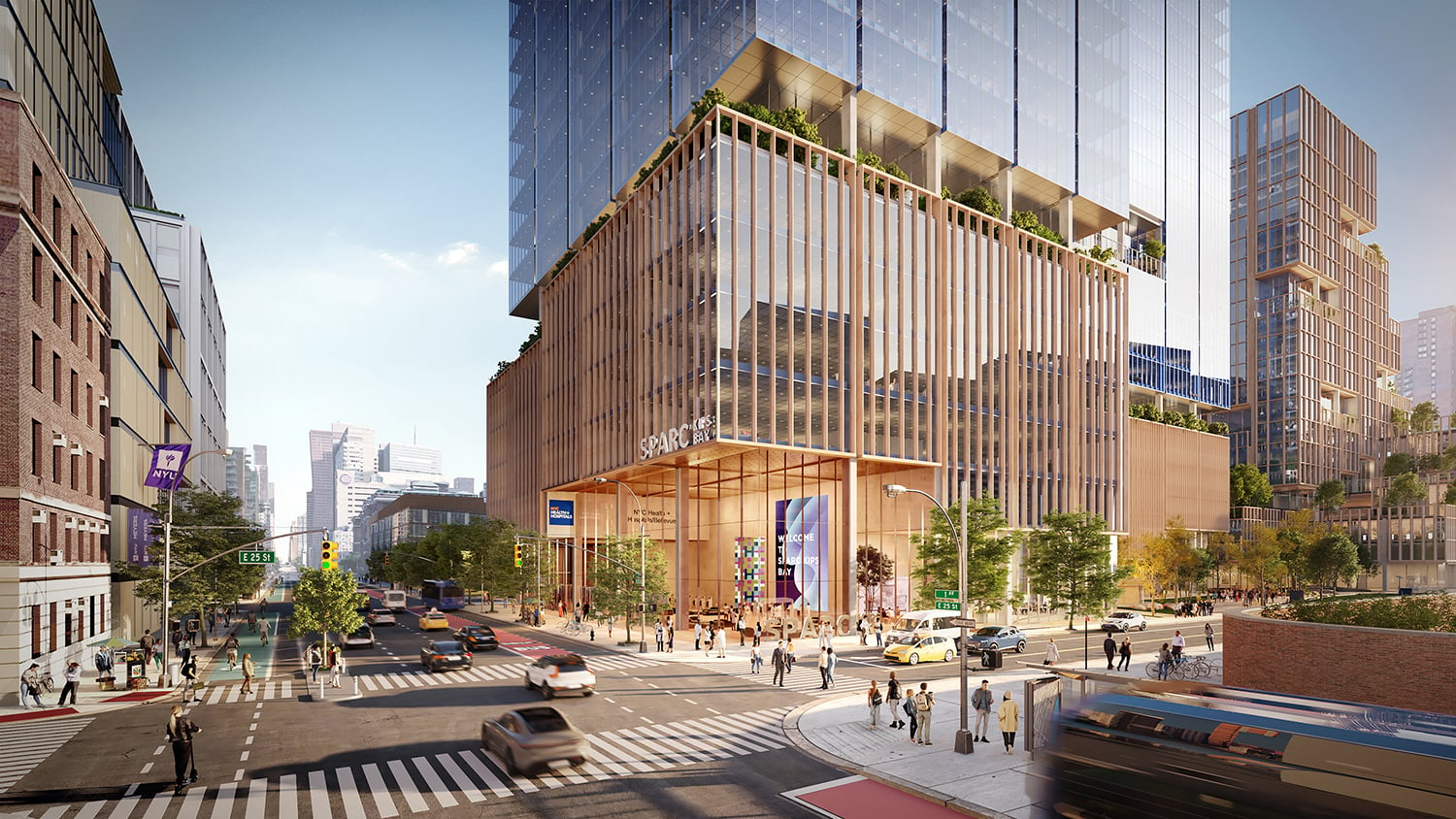
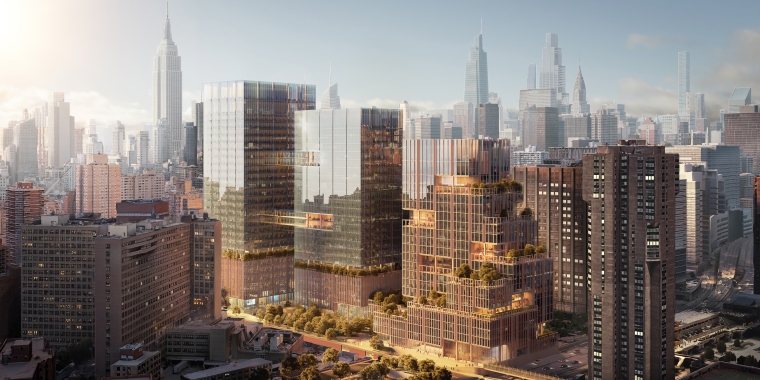
As part of the Green Economy Action Plan, NYCEDC announced that SPARC Kips Bay, a nearly 2-million square foot, first-of-its-kind innovation, jobs, and education center in one of the nation’s premiere life sciences clusters, will be the first large project to implement the Circular Design & Construction Guidelines. By using innovative circular construction methods of public sites within the campus, SPARC Kips Bay will serve as an exemplar for other large public and private projects. To date, SPARC deconstruction has diverted over 76 tons of deconstruction material from landfill by engaging with material salvage and reuse practices.
Scaling Circularity: Piloting Circular Construction Hub at MADE Bush Terminal
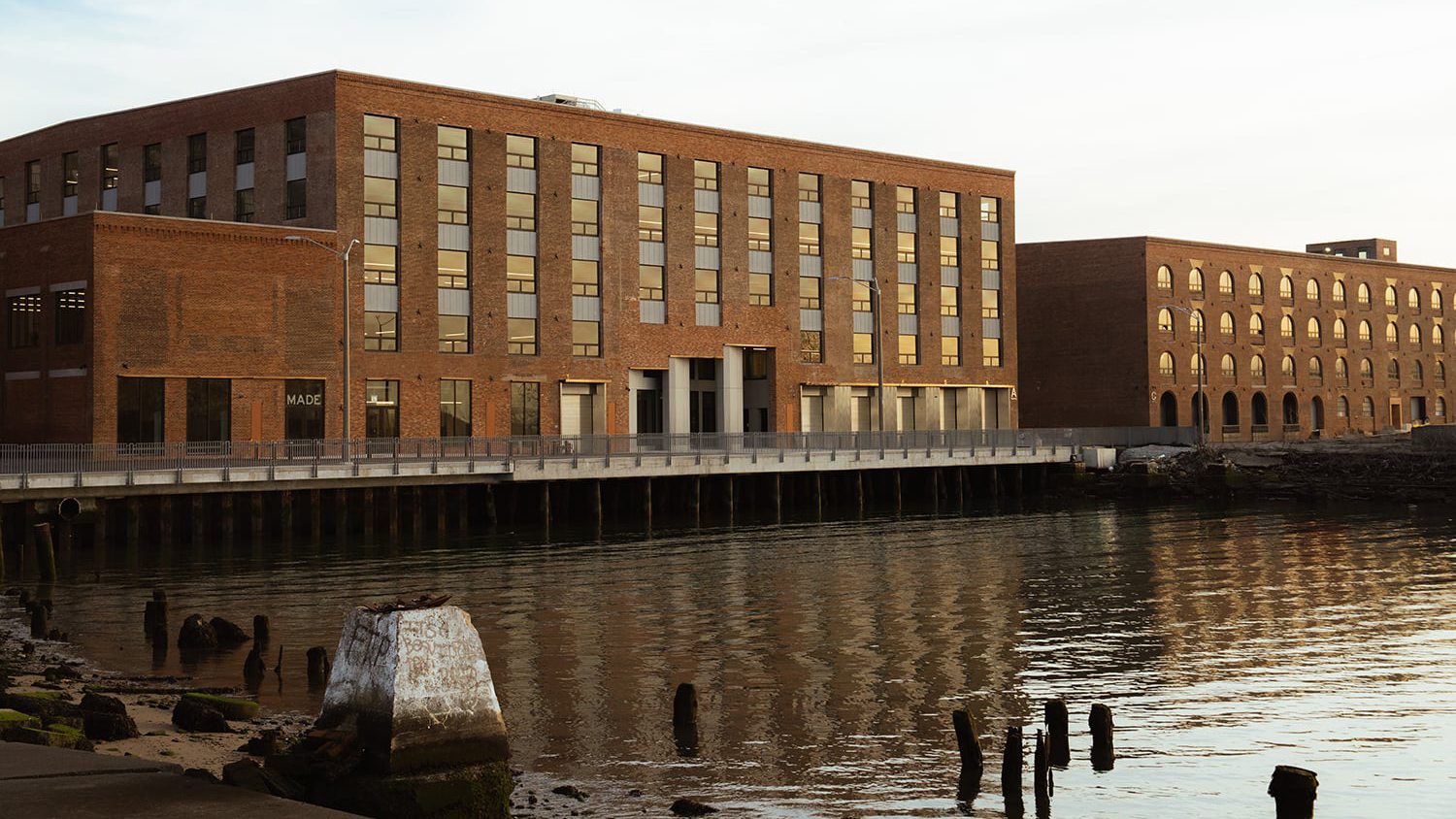
The Circular Construction Hub at MADE Bush Terminal is a pilot initiative designed to help New York City's construction industry recover more value from existing materials and reduce waste. The early implementation of the Circular Design and Construction Guidelines highlighted the need for physical reuse infrastructure to support the transition to closed-loop material supply chains. Today, valuable materials on project sites across the city are frequently discarded because there is no easy way to identify, store, track, distribute, or purchase recovered materials at scale. The Circular Construction Hub at MADE Bush Terminal addresses these barriers by providing the physical infrastructure, technical support, and market connections needed to keep materials in circulation.
Operated by Our Temenos and supported by NYCEDC, the Hub serves as a testing ground for new approaches to material recovery, storage, redistribution, and reuse. Throughout the pilot, Our Temenos and NYCEDC will track key metrics including material volumes recovered, diversion from disposal, storage and utilization rates, material transactions, project participation, economic activity, workforce impacts, and operational performance. These insights will help identify the opportunities and barriers associated with scaling the Circular Construction Hub at MADE Bush Terminal and building a citywide material reuse ecosystem.
Related Projects

Contact Us
If you have questions, please email: