NYCEDC Awards $7 Million Capital Investment to CUNY to Build Green Workforce Training Facilities at Several Colleges Across New York City
The $7M Capital Investment Will Strengthen CUNY-to-Career Pipelines, Directly Benefiting Six CUNY Campuses Across All Five Boroughs
Funding Will Support New and Upgraded Green Infrastructure and Training Facilities at CUNY Campuses, Preparing and Growing Future Workforce for Climate-Driven Careers
NEW YORK, NY—New York City Economic Development Corporation (NYCEDC) today announced the award of a $7 million capital investment to the City University of New York (CUNY) that will be distributed across six campuses to develop and modernize green economy workforce training infrastructure to prepare and train the next generation of New Yorkers for climate-smart careers. The funding will go to a variety of infrastructure investments including specialized training spaces, labs, classrooms, and equipment tailored to green economy instruction. Once complete, it is expected these investments will benefit over 5,900 CUNY students annually.
Building on commitments in PlaNYC and the City’s Green Economy Action Plan, this announcement supports New York City’s broader efforts to grow an equitable green economy, which is projected to host nearly 400,000 jobs by 2040. This investment also reflects the City’s continued investment in its academic and talent ecosystem to create equitable workforce pipelines connecting New Yorkers to future-focused careers, leveraging CUNY’s extensive citywide footprint to support workforce development at scale.
“We are proud to invest in the green workforce that will shape New York City for generations to come,” said NYCEDC Interim President & CEO Jeanny Pak. “As the city’s green economy continues to expand, these investments will deliver the infrastructure CUNY needs to broaden access to high-quality training—connecting New Yorkers to good jobs while strengthening the city’s talent pipeline for a more resilient and sustainable future.”
“CUNY has long been an engine of opportunity for New Yorkers, and this investment builds on that legacy, offering more students access to jobs that will define our city’s future,” said CUNY Chancellor Félix Matos Rodríguez. “By modernizing our campuses with cutting-edge green training facilities, we are strengthening pathways to in-demand climate careers and ensuring our students are ready to join the rapidly growing green economy.”
The investment will support the creation of new and upgraded facilities designed to train New Yorkers for careers in fast‑growing green economy sectors, including clean energy, building decarbonization, climate resilience, and sustainable infrastructure. CUNY will work to deploy the $7 million in funding to advance the following eight projects across six campuses:
- New York City College of Technology Decarbonization Lab: City Tech will build a state-of-the-art Decarbonization Lab for Sustainable Architecture and Performance Testing. Outfitted with a climate chamber, 3D printers, thermal measurement tools, and energy modeling software, the lab will offer hands-on learning to approximately 800 students annually and help New York City advance its decarbonization and climate goals.
- New York City College of Technology will equip specialized labs with advanced infrastructure and environmental testing equipment, preparing students for careers in resilient construction, offshore wind, and sustainable building systems.
- Brooklyn College Biofuel and Food Sustainability Research: Brooklyn College will expand its research and training infrastructure, focusing especially on duckweed, an emerging resource for biofuels, sustainable food production, and climate resilience. Investment in new plant growth chambers and biological safety equipment will help modernize the school's microbiology and biostatistics courses and prepare 375 students each year to succeed in the green economy.
- Medgar Evers College will upgrade laboratories and classrooms with advanced green technology equipment, boosting the college's ability to prepare 600 students across multiple disciplines.
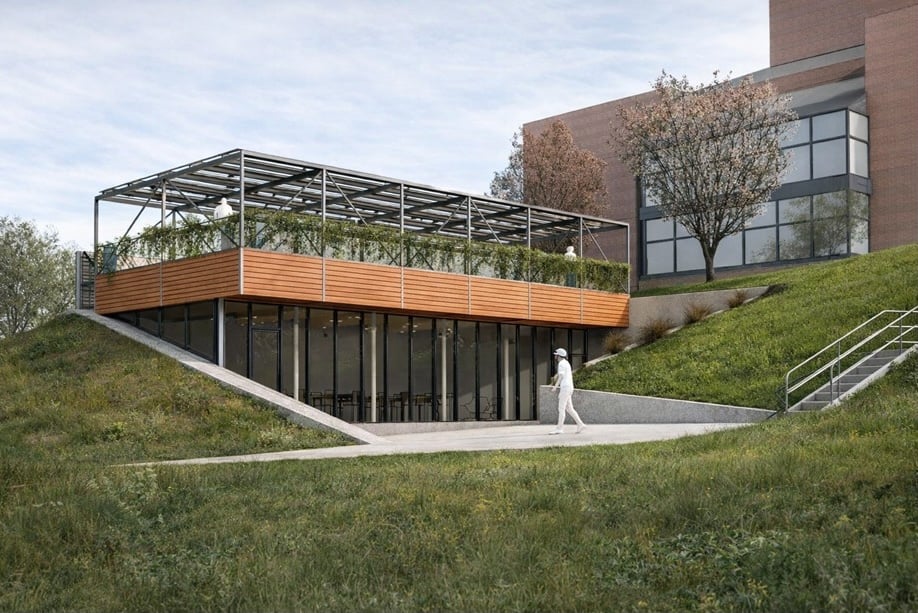
- Queensborough Community College’s Energy Education Center House: QCC will construct a model net-zero emissions “Energy Education Center House” that will serve as a hands-on learning environment for 2,400 students. Featuring solar panels and advanced HVAC systems, the Energy Education Center House will be a catalyst for careers in the building and construction industry.
- Bronx Community College will renovate and equip dedicated training and convening spaces to support students and community members pursuing careers in building electrification, solar installation, and skilled trades.
- The College of Staten Island will create aCollaboratory for Sustainable Business to prepare students for in-demand roles at the intersection of sustainability, finance, and entrepreneurship. Additionally, through its “Developing a Sustainable Workforce for Sustainable Growth of a Green Economy” program, the College of Staten Island will also expand renewable energy, wind power, and smart grid laboratories with advanced training equipment.
As these investments roll out, CUNY and NYCEDC will monitor investment and student impact across all six campuses, ensuring public dollars deliver measurable benefits.
“The Medgar Evers College Interdisciplinary Green Career Readiness Project is a transformative capital investment that will enable Medgar Evers College to expand and modernize laboratory and classroom spaces with state-of-the-art equipment such as environmental analysis tools, and geospatial field equipment that will prepare students across multiple disciplines for high demand green careers,” said Medgar Evers College President Patricia Ramsey.
“This investment allows Queensborough to bring learning to life. By creating a net-zero Energy Education Center House, we are preparing our students for high-demand green careers while supporting New York City’s long-term climate and workforce goals,” said Dr. Christine Mangino, President of Queensborough Community College.
“Brooklyn College is proud to be part of this investment connecting our students to the future of work while advancing climate solutions,” said Brooklyn College President Michelle J. Anderson. “By expanding training in biofuels and sustainable food systems, we are preparing students to lead in the growing green economy and strengthening pathways to equitable, climate-focused careers.”
“At Bronx Community College, this investment strengthens our ability to connect our students and community members to the jobs of the future,” said Bronx Community College (BCC) President Dr. Larry D. Johnson Jr. “By creating dynamic, hands-on training environments, we are intentionally building clear pathways to careers in the growing green economy—advancing opportunities in building electrification, solar installation, and the skilled trades. This work underscores our responsibility as a student-ready institution to align education with workforce demand while expanding access, equity, and long-term economic mobility for the communities we serve.”
“The College of Staten Island is proud to advance this work through the Lucille and Jay Chazanoff School of Business, the Division of Workforce Development and Innovation, and the creation of our Collaboratory for Sustainable Business, where students are preparing for careers at the intersection of sustainability, finance, entrepreneurship, and innovation,” said College of Staten Island President Timothy G. Lynch. “By embedding sustainability across our business curriculum and expanding green economy workforce training in renewable energy, wind power, and smart grid technologies, we are equipping students to lead in New York City’s growing green economy and to help build a more resilient future for Staten Island and beyond.”
“This investment reflects City Tech’s commitment to preparing students for real opportunities in the workforce,” said City Tech Interim President Milton Santiago. “By creating a research facility focused on sustainable building practices, we are equipping our students with the practical skills and knowledge needed to help shape a more resilient and energy-efficient New York City.”
“The DeCarb Lab is the realization of City Tech's longstanding commitment to practice-based learning in service of the public good,” said City Tech Department of Architecture Chair Sanjive Vaidya. “Under the leadership of faculty members Jihun Kim, PhD and Alexander Aptekar, the facility will provide students and researchers across Architecture, Environmental Control Technology and Construction Management & Civil Engineering Technology with hands-on access to the technologies driving the transition to a low-carbon built environment—from climate simulation and thermal performance testing to additive fabrication and carbon footprint analyses.”
“New York City leads on climate because we invest in our people. Today’s announcement of EDC’s $7 million capital investment in CUNY will expand hands-on training and modernize facilities across six campuses, preparing thousands of students each year for the good-paying, climate careers our city needs,” said New York City’s Chief Climate Office Louise Yeung. “If we are serious about tackling the climate and affordability crises, we have to build clear pathways from CUNY classrooms to the jobs of today and tomorrow that will power our green economy.”
“This $7 million investment in CUNY is about building a more inclusive economy while preparing New Yorkers for the jobs of the future,” said NYC Office of Talent and Workforce Development Executive Director Doug Lipari. “By strengthening CUNY’s capacity to train students for careers in climate resilience and sustainable infrastructure, we’re ensuring that New Yorkers across all five boroughs can fully participate in and benefit from the City’s growing green economy.”
“Preparing New Yorkers for the future means investing in both opportunity and access, and this $7 million award from NYCEDC to CUNY helps advance this work,” said Bronx Borough President Vanessa L. Gibson. “Expanding green workforce training across CUNY campuses, including Bronx Community College, ensures that students from the Bronx and across the five boroughs have the tools and support needed to succeed in rapidly growing, climate- and environment-focused careers that create lasting pathways to stability for our communities. Thank you to NYCEDC and CUNY for advancing this critical work and investing in the future of our city.”
“CUNY is one of New York City’s most important educational institutions, and this $7 million investment strengthens that legacy by expanding access to green workforce training across our campuses,” said Council Member Virginia Maloney. “By preparing more than 5,900 students each year for careers in a growing climate economy, we are creating pathways into good-paying, future-focused jobs. And as that economy is projected to support nearly 400,000 jobs by 2040, today’s investment is about more than workforce development—it’s about building a more sustainable and resilient New York City.”
“This investment by NYCEDC is helping to achieve the promise of green jobs for CUNY students. As we implement bold policies to prevent climate change - CUNY students need the skills and training to access these new jobs,” said Council Member Lincoln Restler. “I’m proud that City Tech will soon be home to an innovative Decarbonization Lab that will open pathways to green careers and help build a strong climate workforce in Brooklyn.”
“Our CUNY system continues to provide engaging academic opportunities that help prepare the next generation for successful careers,” said Council Member Linda Lee. “Thanks to NYCEDC’s capital investment, students at Queensborough Community College will benefit from modernized infrastructure that equips them for today’s workforce. As our city advances its commitment to sustainability, we are also strengthening pathways to careers for young people in our neighborhoods. I’m grateful to NYCEDC for this significant investment in the next generation of leaders.”
“I applaud NYCEDC's $7 million capital investment in CUNY's green workforce training facilities, including right here in our district at Brooklyn College's Biofuel and Food Sustainability Research program,” said Council Member Farah N. Louis. “As New York City builds a greener, more sustainable future, it is essential that we equip our students with the tools, training, and infrastructure they need to succeed. This investment—from cutting-edge plant growth chambers to upgraded biological safety equipment—will open doors for hundreds of students each year and help power our city's clean energy economy for decades to come.”
“The DeCarb Lab serves as a vital bridge between academic innovation and New York City’s ambitious pursuit of a zero-carbon environment. By integrating the demands of Local Law 97 directly into our curriculum, we are equipping students with the precise technical skillsets—including carbon footprint analysis and sustainable material prototyping—essential for the current and future green economy,” said Dr. Jihun Kim, Associate Professor of Architecture & Director of CUNY DeCarb Lab at City Tech. “Furthermore, the Lab functions as a premier hub for collaborative research, utilizing our specialized climate chamber and rapid prototyping capabilities to advance the science of sustainable architecture and high-performance building facades. We are proud to train our students, empowering them to lead the global transition toward low-carbon building solutions.”
“During my studies at City Tech, I saw 'sustainability' becoming a buzzword often used to ‘greenwash’ buildings without proof. It was Professor Jihun Kim, PhD, who first introduced me to high-performance simulations—a field that inspired me because it provides the quantitative evidence needed to validate design decisions,” said Oliver Hadi, BTech '22 and Adjunct Lecturer in City Tech’s Department of Architecture. “Now, as an educator and practitioner, I aim to empower my students with those same data-driven tools. While my work has largely been in the digital realm, the DeCarb Lab will be a significant leap forward; it will move us from digital simulation to physical performance testing. This facility will have the potential to turn our students into the specialists the industry is looking for—designers who can actually prove a building’s impact on the environment.”
“City investments in CUNY are investments in New York City’s future workforce. At Kingsborough Community College, we are seeing the direct impact of the New York City Economic Development Corporation’s commitment to emerging industries. From supporting offshore wind and maritime workforce training programs to upgrading our maritime technology facilities, these resources are transforming how we prepare students for high-demand, sustainable careers,” said Christine Zagari-LoPorto, Associate Dean of the Division of Workforce Development and Continuing Education at Kingsborough Community College. “Through our partnership, we are expanding pathways into the green energy sector and ensuring our students are equipped with the skills needed to lead in a rapidly evolving economy. These investments not only advance economic mobility for our students but also strengthen New York City’s position as a leader in innovation, sustainability, and workforce development.”
NYCEDC’s 2025 State of the Economy Report states that higher education remains a cornerstone of New York City’s economy, fueling research, innovation, and the talent pipeline. With more than 100 institutions employing nearly 150,000 people and educating roughly 500,000 students, New York City is a university town. The broader New York Metro is home to more than 800,000 enrolled students, second behind only the Los Angeles metro with 1 million.
New York City’s Green Economy Action Plan projects that the number of New Yorkers employed in the green economy could more than triple to nearly 400,000, or almost 7 percent of all jobs, and its expected GDP output could nearly triple to $89 billion annually by 2040. However, critical to this growth will be the City’s ability to transition our existing jobs and industries to a climate-conscious future and position New Yorkers, particularly those from economically disadvantaged and environmental justice communities, for emerging career pathways in the green economy.
About CUNY
The City University of New York is the nation’s largest urban public university, a transformative engine of social mobility that is a critical component of the lifeblood of New York City. Founded in 1847 as the nation’s first free public institution of higher education, CUNY today has seven community colleges, 11 senior colleges and eight honors, graduate and professional institutions spread across New York City’s five boroughs, serving 247,000 undergraduate and graduate students and awarding 50,000 degrees each year. CUNY’s mix of quality and affordability propels almost six times as many low-income students into the middle class and beyond as all the Ivy League colleges combined. More than 80 percent of the University’s graduates stay in New York, contributing to all aspects of the city’s economic, civic and cultural life and diversifying the city’s workforce in every sector. CUNY’s graduates and faculty have received many prestigious honors, including 13 Nobel Prizes and 26 MacArthur “genius” grants. The University’s historic mission continues to this day: provide a first-rate public education to all students, regardless of means or background. To learn more about CUNY, visit www.cuny.edu.
About NYCEDC
New York City Economic Development Corporation is a mission-driven, nonprofit organization that works for a vibrant, inclusive, and globally competitive economy for all New Yorkers. We take a comprehensive approach, through four main strategies: strengthen confidence in NYC as a great place to do business; grow innovative sectors with a focus on equity; build neighborhoods as places to live, learn, work, and play; and deliver sustainable infrastructure for communities and the city's future economy. To learn more about what we do, visit us on Facebook, X, LinkedIn, and Instagram.