NYCEDC and Harlem African Burial Ground Initiative Organize Special Ceremony to Commemorate the Conclusion of Archaeological Fieldwork at the Harlem African Burial Ground
The Ceremony of Remembrance and Reflection Aims to Honor the Community’s Engagement and Support Throughout the Past Year
Recovered Human Remains and Artifacts from the Historic Burial Ground will be Analyzed at AKRF’s Laboratory Space in New York City.
NYCEDC, in Collaboration with the Harlem African Burial Ground Initiative and Partners will Support the Realization of the 126th Street Harlem African Burial Ground and Mixed-Use Project
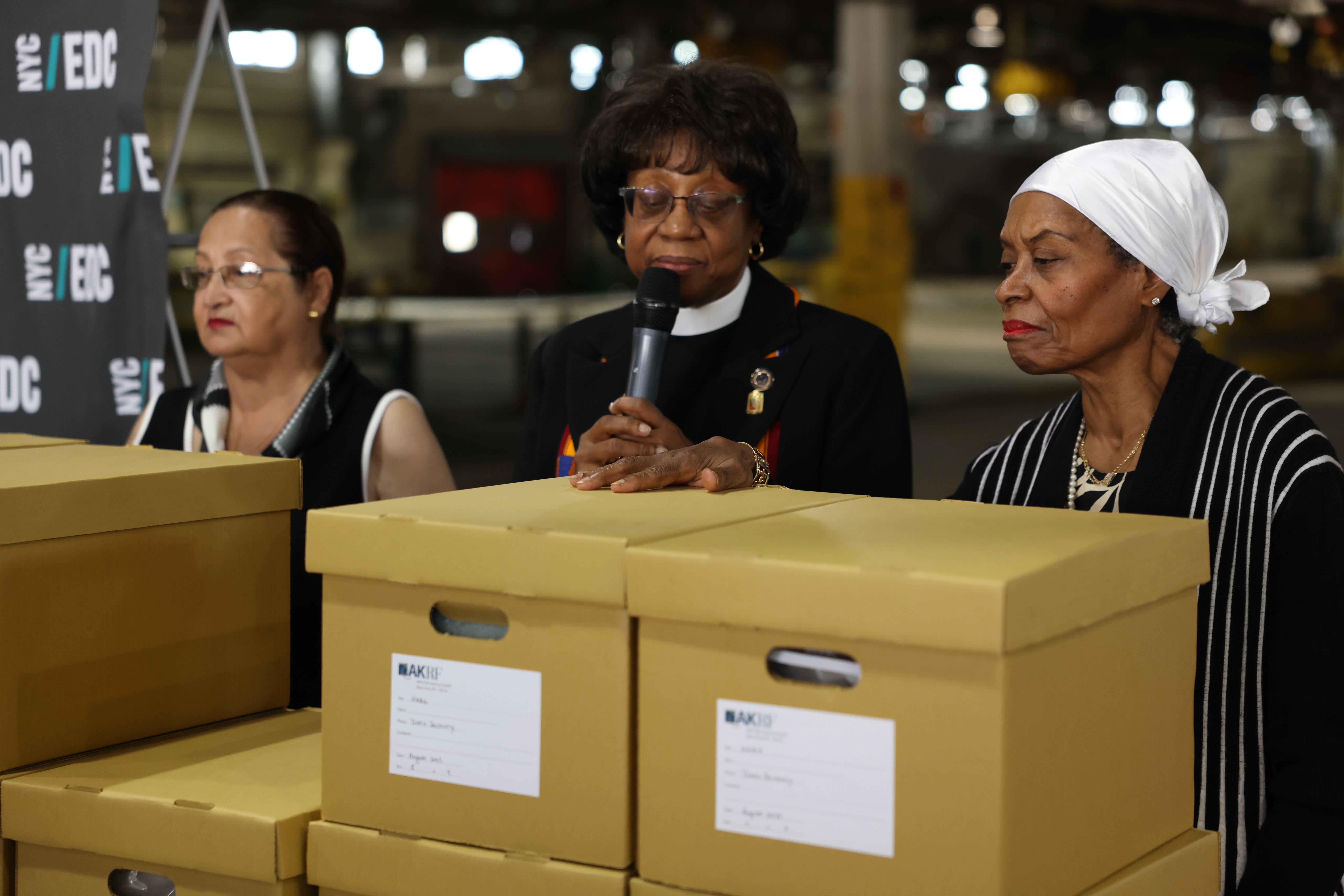
NEW YORK, NY—Today, the New York City Economic Development Corporation (NYCEDC), the Harlem African Burial Ground Initiative (HABGI), and the Harlem community gathered as part of a special ceremony to mark the conclusion of Archaeological Fieldwork at the Harlem African Burial Ground and honor the community’s engagement and support throughout the past year. The ceremony took place within the site of the decommissioned 126th Street Bus Depot in East Harlem and featured remarks from the HABGI, Elmendorf Reformed Church, community leaders, project partners, and performances by Antoinette Montague and IMPACT Repertory Theatre.
The Archaeological Fieldwork was led by AKRF Inc., a consulting firm selected by NYCEDC in October 2023 tasked with uncovering and documenting this important history. Throughout the archeological fieldwork, the site was carefully managed by Armand Corporation, a Black- and woman-owned construction management firm. The Archaeological Recovery Work Plan was developed in concert with HABGI and other consulting parties, including the New York City Landmarks Preservation Commission. The Work Plan includes fieldwork, laboratory analysis, as well as a Technical Report of the findings.
This phase of archaeological fieldwork was guided by a dedicated group of specialists across many disciplines to ensure that the stories embedded in the burial ground are studied with care and preserved for future generations. Innovative techniques, such as water screening, were utilized to ensure careful collection of all findings-- even those that might otherwise go unnoticed.
The AKRF team is supported by two bioarcheologists, Dr. Rachel Watkins and Dr. Aja Lans, both who have expertise in the study of human remains of African descent. Their addition to the team will ensure the human remains uncovered are analyzed with the necessary cultural sensitivity. The Technical Report is anticipated to be released after additional consultation with the consulting parties on the analyses and results of the findings from the fieldwork phase.
“The conclusion of this phase of archaeological work is another crucial milestone towards properly memorializing and remembering this historic burial ground and eventual redevelopment of the 126th Street Bus Depot,” said NYCEDC President & CEO Andrew Kimball. “We remain committed in uncovering this piece of New York City History and look forward to working with the Harlem African Burial Ground Initiative, our partners, and the Harlem community on the next steps of this project.”
In tandem with the robust archeological fieldwork, NYCEDC partnered with Bridge Philanthropic Consulting to lead an 18-month education and engagement campaign to raise awareness of the history and significance of the Harlem African Burial Ground. The campaign, titled “The History Beneath Our Feet: Unearthing Our Legacy”, provided high-quality events throughout Harlem that centered on the themes of memorialization, legacy, and community. In coordination with NYCEDC and HABGI, Bridge Philanthropic Consulting has engaged over 1,000 people across more than 20 virtual and in-person events. These events have included presentations to NYCHA residents and Harlem-based organizations, family history workshops at senior centers and afterschool programs, and panel discussions at institutions such as the Schomburg Center for Research in Black Culture highlighting the work of other African burial grounds across the city. Learnings from this campaign will be documented in a forthcoming engagement report. Community engagement and feedback will continue to be critical as the project enters a new phase.
“Today is an emotional day for the Initiative as we get one step closer towards uncovering and honoring a piece of New York City history that has been neglected for far too long,” said Harlem African Burial Ground Initiative Leadership Dr. Patricia A. Singletary, Melissa Mark-Viverito, Sharon Wilkins, and Melinda Velez. “We are grateful to everyone who played a key part in this phase of archaeological work and look forward to working with our partners on the next phase of this project so we can properly memorialize our ancestors and educate New York City and beyond about the history of the Harlem African Burial Ground.”
“As a minority-owned business of African descent, we are honored to have taken part in this archaeological fieldwork and community effort,” said Armand Corporation President & CEO Barbara A. Kushner. “The respectful recovery of African American remains was carried out with the utmost dignity and care, paying tribute to those who came before us and reaffirming our collective responsibility to preserve their legacy.”
“Our congratulations to the HABG Initiative and NYCEDC! It has been a great honor collaborating on this important project with such a dedicated group. Archaeological fieldwork took a total of six months over three field seasons and involved the machine excavation of almost 100,000 cubic feet of concrete and modern fill, the hand excavation of almost 24,000 cubic feet of sensitive historic fill deposits, and many hundreds of hours of careful screening,” said A Michael Pappalrado, RPA Archaeologist. “The success of this effort would not have been possible without the participation of many talented archaeologists, several specialists and support staff, and the skilled contractors and machine operators who navigated myriad logistical challenges!”
“At Bridge Philanthropic Consulting, it has been our profound honor to help lift up the stories of the Harlem African Burial Ground through education and community engagement. This profound work has been about remembrance, justice, and ensuring that the voices of our ancestors are preserved with dignity for future generations,” said Bridge Philanthropic Consulting CEO Dwayne Ashley. “By engaging more than 1,000 community members in dialogues, workshops, and cultural events, and reaching tens of thousands of New Yorkers, we have worked to center the legacy of those interred here in Harlem’s collective memory. As the project enters this next phase, Bridge Philanthropic Consulting remains deeply committed to the Harlem community to honor this sacred ground and to ensure its history continues to inspire healing, learning, and unity.”
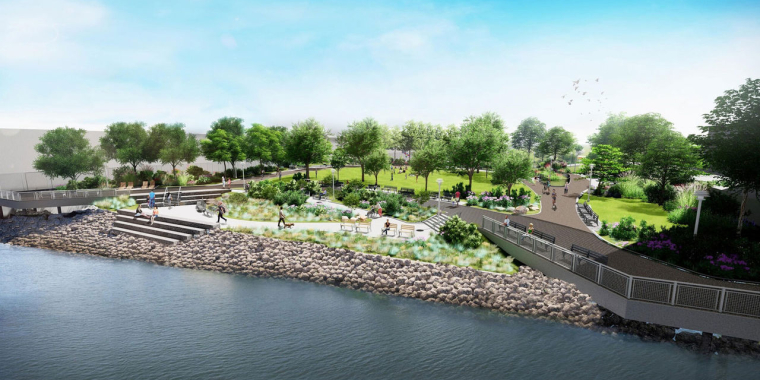
The 126th Street Harlem African Burial Ground and mixed-use project, which was developed through a community-based planning process with the HABGI and approved through the ULURP process in 2017 with support from Community Board 11, will honor and memorialize the Harlem African Burial Ground with a permanent public outdoor memorial on the entire historic footprint of the burial ground, and an indoor cultural education center providing public programming about the burial ground and its history.
The project will address affordable housing and job creation needs in East Harlem on the remainder of the site through a mixed-use program including more than 600 units of housing, a minimum of 80 percent of which will be income-restricted affordable homes, commercial space and additional community space. The site was included as part of Mayor Adams administration’s “24 in 24” plan that aims to advance 24 affordable housing projects on public sites in 2024 that will ultimately create or preserve over 12,000 units of housing.
NYCEDC plans to release a public RFP for a non-profit operator of the cultural education center and steward of the outdoor memorial later this fall. The search for a developer for the mixed-use program will begin following the operator selection. To learn more about the Harlem African Burial Ground and these upcoming opportunities, please visit the HABGI’s Instagram and NYCEDC’s 126th Street Harlem African Burial Ground Memorial and Mixed-Use Project webpage.
About NYCEDC
New York City Economic Development Corporation is a mission-driven, nonprofit organization that works for a vibrant, inclusive, and globally competitive economy for all New Yorkers. We take a comprehensive approach, through four main strategies: strengthen confidence in NYC as a great place to do business; grow innovative sectors with a focus on equity; build neighborhoods as places to live, learn, work, and play; and deliver sustainable infrastructure for communities and the city's future economy. To learn more about what we do, visit us on Facebook, X, LinkedIn, and Instagram.
About Harlem African Burial Ground Initiative
Founded in 2009, the Harlem African Burial Ground Initiative (formerly known as the Harlem African Burial Ground Task Force) is a group of community leaders whose goal is to advocate for and guide remembrance, honoring, and memorialization for the Harlem African Burial Ground. HABGI is led by former District 8 City Council Member and Speaker Melissa Mark-Viverito, Pastor Emerita of Elmendorf Reform Church Rev. Dr. Patricia A. Singletary, former Manhattan Deputy Borough Historian Sharon Wilkins, and former Legislative Advisor and East Harlem resident Melinda Velez. To learn more about the Harlem African Burial Ground Initiative’s advocacy work, please visit HABGI’s Instagram.