NYCEDC Finalizes Route Changes for Ferry Optimization Plan, Announces Identification of New Landings, Kicks Off a Vision for the Future of Ferries in the New York Harbor
First-Ever Comprehensive Analysis of the NYC Ferry System Produces a Ferry Optimization Plan to Speed Up Commutes, Reduce Subsidy-Per-Rider, and Improve Access, Efficiency, and Availability
New Optimized Route Map Follows Overwhelmingly Positive Rider Feedback to July Proposal; More Than 15,000 Public Responses, Nearly 90 Percent Will Ride the Same or More
Expansion Landings Identified at East Harlem 125th Street and MADE-Bush Terminal in Sunset Park Demonstrate Commitment to the Future of NYC Ferry as NYCEDC Embarks on a Vision for the Future of Ferries in the New York Harbor
Released Today, the 2025 Ferries Report Outlines Optimized Route Map, Cost-Effective Investments, and Process for Developing the Upcoming Vision
NEW YORK, NY—The New York City Economic Development Corporation (NYCEDC) and NYC Ferry today announced a finalized comprehensive redesign of NYC Ferry routes based on the proposed map in the July 2025 Ferry Optimization Plan. The final changes follow significant community and rider engagement on the proposed map and mark the first-ever system-wide reconfiguration of routes since the launch of NYC Ferry in 2017. The optimized routes, which will go into effect on December 8, 2025, will shorten commute times, provide riders with more places to go, and improve the overall efficiency of the system. In addition to the optimization improvements, NYCEDC is making short-term commitments to grow the system, announcing the expansion of the East 34th Street Ferry Terminal, and the construction of a second NYC Ferry homeport facility. Further, NYCEDC has identified two landings where we will begin design and engagement with community stakeholders, at East Harlem 125th Street and MADE-Bush Terminal in Sunset Park. These new improvements and landings, as well as the start of a Vision for the Future of Ferries in the New York Harbor—a document that NYCEDC will develop to explore and evaluate the viability of different types of ferry service for waterfront neighborhoods and regions of New York City—signals the city’s commitment to the future of ferry service as an indispensable transit option for New Yorkers and a vessel for economic growth for generations to come.
The Ferry Optimization Plan builds on the success of the NYC Ferry Forward plan which, since launched in 2022, has improved the accessibility, affordability, and fiscal sustainability of the NYC Ferry system. Over the past three years, NYC Ferry has boasted record ridership and all-time highs in farebox revenue. NYCEDC recently posted the Fiscal Year 2025 Financial Transparency Report, which touts the lowest NYC Ferry per-rider-subsidy ever at $8.33, a more than 35 percent reduction in subsidy from its peak in 2020. Additionally, because of today’s Ferry Optimization Plan announcement, NYCEDC anticipates the per-rider-subsidy will fall another $1.00 by 2028, while expecting ridership to increase by an estimated 14 percent.
The results of the Ferry Optimization Plan, the explanation of investments and new landings, and the foundation for the Vision are contained in the 2025 Ferries Report, released today.
“From Throgs Neck to the Rockaways, our city’s ferries give New Yorkers and tourists alike a convenient, affordable way to travel across the five boroughs,” said New York City Mayor Eric Adams. “Thanks to smart investments to make our ferry system more accessible, affordable, and sustainable, we’ve already shattered ridership records this summer, and with this comprehensive redesign, we’ll embark on the next great stretch of NYC Ferry’s journey to bring this dynamic service to even more New Yorkers.”
“NYCEDC is thrilled announce the finalized Ferry Optimization Plan, marking the first-ever systemwide redesign to deliver faster commutes, better connections, and improved service for New Yorkers across all five boroughs,” said NYCEDC President & CEO Andrew Kimball. “As we embark on this next chapter, the development of a new Vision for the Future of Ferries in the New York Harbor and begin the work for new landings in East Harlem and MADE-Bush Terminal in Sunset Park reaffirm our commitment to expanding ferry service, exploring new vessel technologies, and supporting vital job centers and neighborhoods throughout the harbor for generations to come.”
“We are proud to have worked closely with EDC to develop these route upgrades and new landings,” said NYC DOT Commissioner Ydanis Rodriguez. “Our waterways have tremendous potential to reduce New Yorkers’ commute times from the outer boroughs and we are excited to see NYC Ferry take this next major step to improve service as ridership continues to grow.”
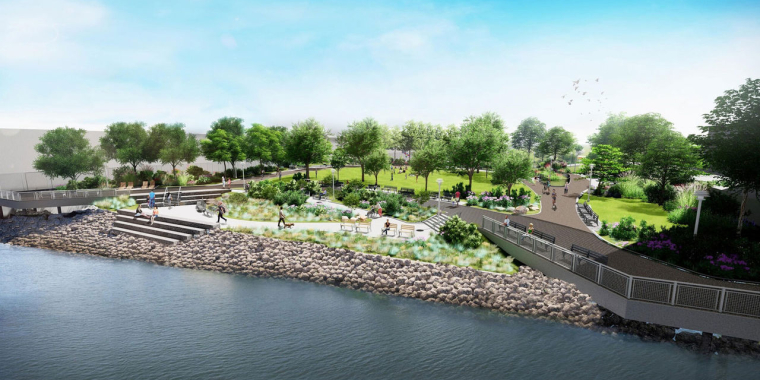
“NYC Parks is proud to be working with our partners at EDC to bring a new ferry service that will complement the future Manhattan Greenway Harlem River Park and give residents of East Harlem and visitors another reason to come and enjoy the new park.” said NYC Parks Commissioner Iris Rodriguez- Rosa.
“Today’s announcement marks another important milestone for NYC Ferry, building on its reputation as the nation’s leading commuter ferry system and furthering its ability to provide everyday New Yorkers with even more reliable, affordable, and efficient transportation across the city’s waterways. On behalf of Hornblower's NYC Ferry crew, we look forward to building on our record-setting ridership to successfully implement this next stage of NYC Ferry. We thank our partners at NYCEDC for their commitment to delivering a responsive and adaptable transit system, and we especially thank our millions of riders for their feedback and insights to ensure these changes deliver real results for their trips onboard - whether that’s a daily commute or the chance to visit a new neighborhood by ferry,” said Jonathan Figueroa, Senior Vice President of Ferries and Transport Operations at Hornblower Group, the founding operator of NYC Ferry.
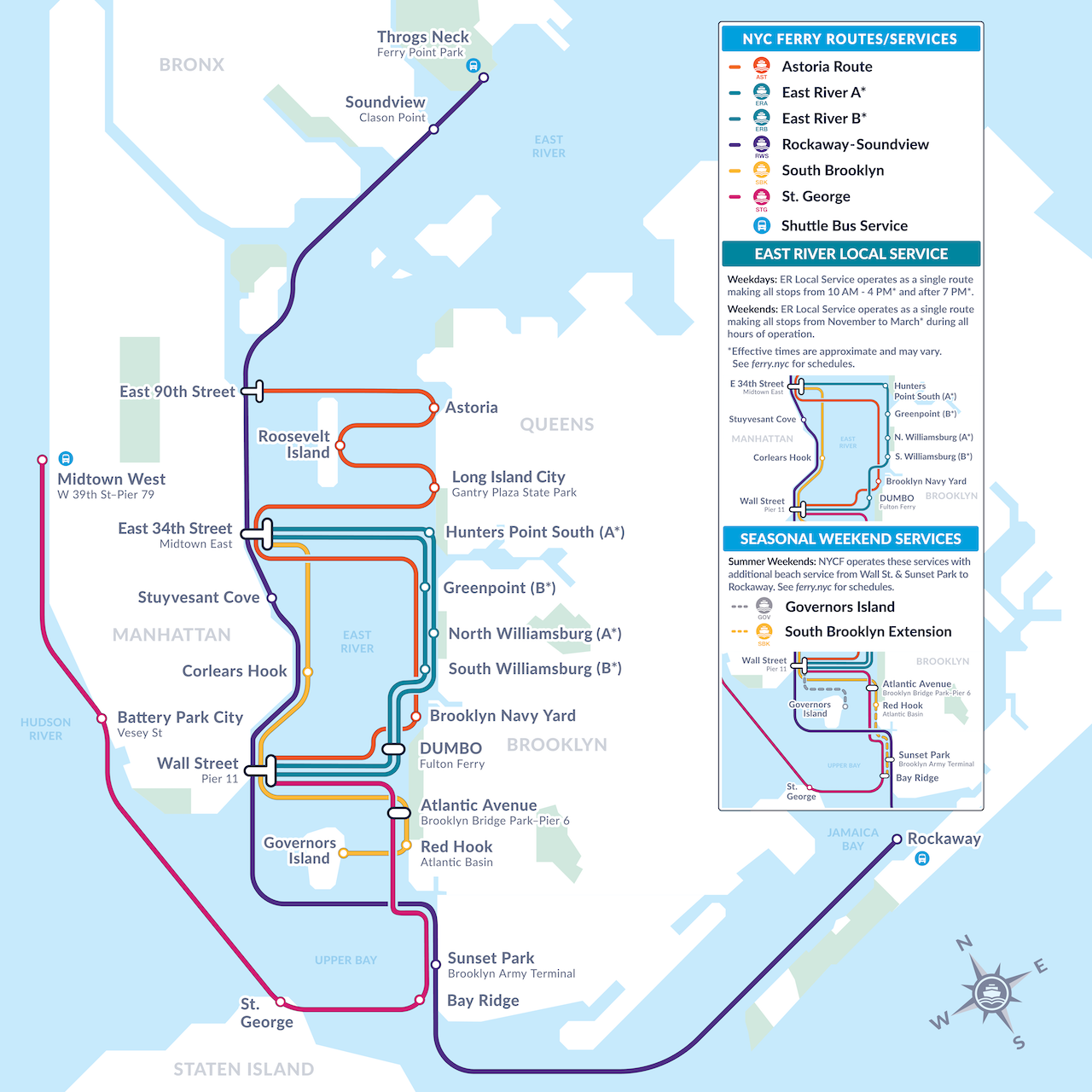
Ferry Optimization Plan
Today, after substantial rider feedback on the proposed Ferry Optimization Plan, NYCEDC is announcing final route changes to the system. Following release of the proposed plan this past July, NYCEDC and NYC Ferry engaged thousands of riders through events, a webinar, and digital campaigns through Labor Day, receiving more than 15,000 responses – the overwhelming majority of which were positive. Nearly 90 percent of respondents said they would ride the ferry more often or continue to ride the ferry at the same frequency, and more than 70 percent said the changes would better connect them with places they want to go.
Over the last several weeks, NYCEDC adjusted the initial proposal to address key comments from riders and finalize the optimized route map. The final Ferry Optimization Plan will shorten travel times, provide riders with more places to go, improve on-board capacity, increase trip frequency and are anticipated to increase ridership even further, while reducing the subsidy per-rider.
The Ferry Optimization Plan, to be implemented by the end of 2025, will:
- Split the East River into two routes at most times of day, increasing capacity and making trips faster. A local route will serve all stops on the East River during midday on weekdays and on winter weekends to preserve connectivity.
- Combine the Soundview and Rockaway routes, getting Rockaway route riders to Midtown and E 90th St with a one-seat ride and filling previously near-empty boats going toward the Bronx during morning commutes.
- Connect the St. George (Staten Island) route to Brooklyn and the rest of the system. Create access for the first time from Brooklyn to Manhattan’s west side.
- Provide a one-seat ride to Midtown for the South Brooklyn route, opening a popular job center to Red Hook and Atlantic Ave residents and increasing frequency.
- Introduce an additional pilot service in South Brooklyn on Summer weekends in 2026, extending the new South Brooklyn route to Bay Ridge and Sunset Park for local connections.Thispilot service will be analyzed and evaluated next Fall.
Short Term Commitments to Grow NYC Ferry
Immediate investments to support the full system will ultimately support future growth. Those initial investments include the completion and delivery of a second NYC Ferry homeport facility (Homeport II), already underway and launching in 2027, located in Atlantic Basin in Red Hook, and a new expansion project at the East 34th Street Ferry Terminal to add more slip and queuing capacity. Increasing the vessel and passenger capacity at the East 34th Street Ferry Terminal is critical to handle the demands of today’s service and to prepare for future service increases. Homeport II will provide new space for about half the NYC Ferry fleet that today is stored and maintained in a series of non-permanent mooring configurations.
In addition to these systemwide investments, NYCEDC has identified two locations for the next stage of NYC Ferry expansion: 125th Street, East Harlem and MADE-Bush Terminal, Sunset Park. These new landings are low-cost to operate and achievable with the existing fleet. Additionally, 125th Street, East Harlem and MADE-Bush Terminal, Sunset Park are among those that have been studied and requested in the past, are located near existing routes, and are undergoing, or have undergone, significant waterfront development, making them attractive and cost-effective options.
125th Street, East Harlem
The addition of a new ferry landing at 125th Street East Harlem will bring service to a neighborhood with significant demand for transit options with only modest increases in operational costs to add additional service. The East Harlem community has long requested improved connectivity, particularly in relation to and complementing the developing Manhattan Greenway Harlem River project along the Harlem River. As the MEC development sites next to the Harlem River from 125th to 127th streets between Second and Third Avenue are realized, this transportation connectivity will be more important than ever. Given the landing’s proximity to East 90th Street, East Harlem can be served with an extension of an existing route, keeping operations costs minimal.
MADE-Bush Terminal, Sunset Park
The area around MADE-Bush Terminal has transformed into a vibrant, mixed-use hub that supports local industry, employment, and open space. The MADE-Bush Terminal campus and adjacent South Brooklyn Marine Terminal (SBMT) on public sites as well as numerous private redevelopments are fueling economic growth and creating thousands of jobs yet lacks direct ferry service for its large commuting workforce. The new landing will provide convenient public transit access and support public and private job centers while also providing residents of Sunset Park with two NYC Ferry landings—the existing Sunset Park South/BAT landing and the future landing at MADE-Bush Terminal. Given its proximity to existing routes, MADE-Bush Terminal can be served with minimal new operating costs by incorporating it with existing services.
Developing an Expansive Vision for the Future of Ferries in the New York Harbor
New Yorkers have long advocated for ferry service in additional parts of the harbor, seeking faster transit options, higher-quality transportation, and the promise of ferries as a source of recreation and economic development. That is why NYCEDC will embark on creating a Vision for the Future of Ferries in New York Harbor to explore opportunities for expanded ferry service.
The Vision will be expansive and evaluate the viability of different types of ferry service for waterfront neighborhoods and regions of New York City. It will look beyond NYC Ferry and include opportunities for both public and private ferry service. As part of the Vision, NYCEDC will comprehensively evaluate new sites by reviewing key planning data and engaging with communities to understand their core needs. Where ferry service has potential, the Vision will consider multiple service types including full-time, part-time, and seasonal service options—both public and private. As part of a regional coordination effort among ferry operators and with an eye towards sustainability, the Vision will establish priorities for infrastructure development including key vessel charging needs. Taken together, the Vision will be a guide for the ongoing support of passenger transit across New York’s waters.
“Investing in transportation is key to making sure New Yorkers can get where they need to be – whether it’s work, school, or home,” said U.S. Senator Kirsten Gillibrand. “The redesign and expansion of the NYC Ferry network will improve efficiency by speeding up commute times and increasing accessibility to different parts of the city. I’m proud to support the Ferry network and will continue to invest in efforts that connect communities across New York.”
“With more New Yorkers riding the NYC Ferry than ever before, I welcome the expansion and increased service that EDC is delivering. I'm especially excited that ferry service will soon be coming to 125th Steet in East Harlem and I appreciate that EDC will be exploring trans-Hudson service to Upper Manhattan's West Side, for which I have advocated for years,” said Manhattan Borough President Mark Levine. “Bringing ferry service to more waterfront neighborhoods is vital for the transit equity and economic growth of our city and I look forward to working with EDC to achieve this goal.”
“Expanding and optimizing ferry service across our city is a step in the right direction toward creating accessible transportation for all New Yorkers,” said Bronx Borough President Vanessa L. Gibson. “I commend NYEDC for acknowledging the importance of including the Bronx in this vision through the Soundview route expansion and exploring additional connections across our city's waterfronts. These actions will strengthen our city's transit network, while bringing us closer to ensuring that Bronx residents have access to faster, more reliable, and affordable transit options.”
“We now have a realistic framework to open up access, shorten journey times, and use public resources more responsibly. Our waterfronts will be functional, inclusive, and mirror how people actually navigate throughout our city. The results of this study proves we can connect workers to jobs, students to schools, and families to opportunity—while making our landings resilient to a changing climate and the demands of a growing city,” said NYC Council Majority Leader and Chair of the Committee on Economic Development Amanda Farías. “This is how we build trust in public transit and confidence in capital investment: by showing that the city’s capital dollars—for new landings, infrastructure, and resiliency upgrades— are being spent strategically, with measurable returns for our communities.”
“The NYC Ferry system has become a critical part of our city’s transportation network,” said New York City Council Majority Whip Selvena N. Brooks-Powers, Chair of the Committee on Transportation and Infrastructure. “I’m encouraged to see EDC taking steps to strengthen and streamline the system through the Ferry Optimization Plan. These changes will improve reliability and access for many riders, but our work isn’t done. I look forward to the day that our ferry expansion efforts reach the communities in desperate need of transportation equity and access. We must continue expanding ferry service to reach more transit deserts and ensure that every New Yorker—from Southeast Queens to Staten Island—can benefit from a connected and resilient ferry network.”
“The NYC Ferry getting an expansion at the E 34th Street Ferry Terminal in the district I represent is a wave of good news that’ll make one of the best ferry systems in the country even better,” said NYC Council Member Keith Powers. “The NYC Ferry is a critical lifeline for so many New Yorkers that offers a safe, fast and scenic option to get around the city. The newly redesigned map—the first since the launch of the ferry in 2017—will optimize routes, shorten commute times and give New Yorkers an overall enhanced experience on board. I couldn’t be more excited to see how the ferry continues to move New Yorkers.”
“I am thrilled that Staten Island is finally being connected to the full NYC Ferry system. This long-overdue expansion is not just a victory for transit equity but a vital step forward in strengthening our borough’s connection to the rest of the city,” said NYC Council Member Kamillah M. Hanks, District 49. “By linking Staten Island to Brooklyn and Pier 11, we are unlocking new opportunities for commuters, supporting our local economy, and reaffirming Staten Island’s role in New York City’s future. I commend NYCEDC for their vision and commitment to delivering on this critical need.”
“The East 34th Street Ferry Terminal is a critical gateway for our district, and we welcome NYCEDC’s efforts to improve queuing and expand berthing capacity for the many East Side residents who rely on ferry service every day,” said Chair of Manhattan Community Board 6 Sandra McKee. “Manhattan Community Board 6 looks forward to continued collaboration to further enhance passenger comfort and convenience at this important transit hub in our district.”
“Ferries are a critical transportation option for New Yorkers, and we couldn’t be more excited that the system will be improving next month,” said Ben Furnas, Executive Director of Transportation Alternatives. “We’re especially happy that there will be a new Staten Island-Brooklyn ferry connection and a seamless ride from Midtown to South Brooklyn. As more New Yorkers choose to commute via boat, the entire city will benefit from cleaner air, faster commutes, and a wider public transit network.”
“Optimizing routes and planning future ferry service are key to reducing emissions, improving connectivity, and ensuring underserved neighborhoods benefit from these investments,” said Furhana Husani, Director of Programs and Climate Initiatives. “Waterfront Alliance is pleased to see NYCEDC and NYC Ferry advancing a vision that strengthens climate resilience and expands equitable access across our waterfront communities.”
“Good planning takes public feedback seriously,” said Tiffany-Ann Taylor, VP of Transportation at RPA. “Over the summer, the NYC EDC and NYC Ferry gathered community feedback to guide the optimization of this vital component of the city’s mobility system, the first redesign of the NYC Ferry system since its launch in 2017. RPA applauds the new Ferry plan; the additions to the system, such as Harlem’s own E 125th landing, are creating more efficient and equitable ferry connections. New York City is a coastal city, and RPA strongly supports the City’s efforts to revive water-based transport for people and goods. While we must continue to invest in efficient and accessible transport, optimizing the NYC Ferry system is an important step in getting us there.”
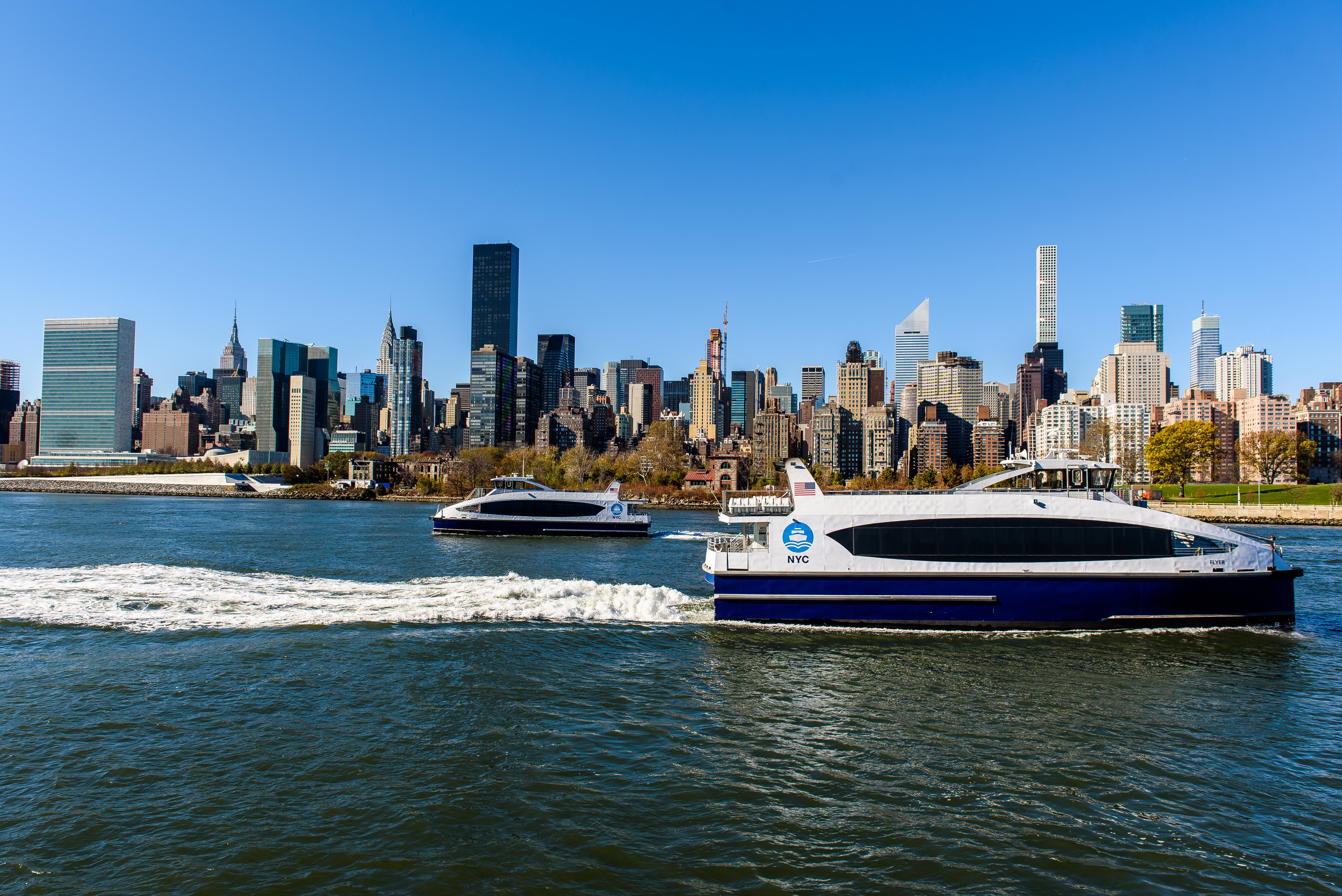
Spanning 70 nautical miles, the NYC Ferry system operates 38 vessels across six routes and 25 landings—the largest passenger-only ferry fleet in the United States. NYC Ferry is not only a major transit option for New Yorkers’ daily commutes—providing a vital link between job centers, schools, parks, and cultural destinations in all five boroughs—it is a trusted and iconic fixture of the city’s waterfront and is seen daily by millions of New Yorkers and tourists on the water and from New York’s shoreline, buildings, bridges, and more.
About NYCEDC
New York City Economic Development Corporation is a mission-driven, nonprofit organization that works for a vibrant, inclusive, and globally competitive economy for all New Yorkers. We take a comprehensive approach, through four main strategies: strengthen confidence in NYC as a great place to do business; grow innovative sectors with a focus on equity; build neighborhoods as places to live, learn, work, and play; and deliver sustainable infrastructure for communities and the city's future economy. To learn more about what we do, visit us on Facebook, X, LinkedIn, and Instagram.