NYCEDC Unveils Next Cohorts for Two Groundbreaking Initiatives, Advancing Regulatory Innovation for Climate Technologies with Key Partners
Through NYC Mass Timber & Resilient Energy Studios, NYCEDC, In Partnership with Newlab, NYC Department of Buildings, and NYC Fire Department, Advance Regulatory Wayfinding and Innovation in Energy Storage and Low-Carbon Construction
Announcement Fulfills Key Commitments in “Green Economy Action Plan”, Advances Mayor Adams’ “PlaNYC: Getting Sustainability Done”
NEW YORK, NY—Today, New York City Economic Development Corporation (NYCEDC) and Newlab unveiled the next cohorts for the NYC Mass Timber Studio and the Resilient Energy Studio, two groundbreaking initiatives focused on accelerating climate-forward technologies across New York City. Led by NYCEDC, in partnership with the New York City Department of Buildings (DOB), and the New York City Fire Department (FDNY), these Climate Innovation Studios advance regulatory wayfinding and innovation to unlock the safe deployment of critical climate technologies across New York City.
This announcement advances the City’s Green Economy Action Plan, helping to foster a thriving green economy, decarbonize the built environment, and prepare urban infrastructure for a rapidly changing future. As part of the City’s decarbonization efforts, NYCEDC established Climate Innovation Studios, a suite of technical assistance programs to accelerate the safe deployment of climate technology solutions.
“NYCEDC is proud to announce the 2025 cohorts of the NYC Mass Timber and Resilient Energy Studios, two groundbreaking programs advancing regulatory wayfinding and innovation to unlock the safe deployment of critical climate technologies across the five boroughs,” said NYCEDC President & CEO Andrew Kimball. “The continued momentum of both programs reflects the powerful impact of interagency collaboration to advance the Green Economy Action Plan and build a cleaner, more resilient city.”
“Whether it’s helping a small business open up shop, an affordable housing project get shovels in the ground, a homeowner bring their property up to code, or a tech start-up bring their ideas from lines on paper into the real world, we are committed to utilizing the expertise of our trained professionals here at the Department of Buildings to promote smart and safe development in this city,” said Buildings Commissioner Jimmy Oddo. “The NYC Mass Timber and Resilient Energy Studios gives us the opportunity to work closely with local innovators on their emergent technology projects, so we can help guide them towards the kind of code compliant development which helps to foster local resiliency and improve safety in our built environment.”
“The FDNY has closely engaged with the NYCEDC and DOB on both the Mass Timber Studio and the Resilient Energy Studio. Initiatives like these that streamline communication between regulatory agencies and industry allow us to continue to thread the needle on the City’s climate goals, while upholding the highest levels of fire protection and life safety. That’s wholly due to the expertise and consultation of our staff here at the FDNY,” said FDNY Commissioner Robert S. Tucker.
“We must constantly explore new and innovative technologies that will protect the city for generations to come, while also making New York an even better place to live,” said Mayor’s Office of Climate & Environmental Justice Executive Director Elijah Hutchinson. “These initiatives will add green jobs while making sure more New Yorkers will benefit from a cleaner and greener city. With new technologies and new sites using mass timber and low-carbon, less polluting construction, New Yorkers will see and feel the difference.”
“Queens is living at the crossroads of technology and combatting the climate crisis, and I'm proud that we are becoming a national leader in both. I'm excited of the work by NYCEDC and all our partners to ensure New York City has the technology it needs to mitigate climate change,” said Queens Borough President Donovan Richards Jr. “We must all continue to work together to make sure we have the resources needed to deal with our ever-changing climate, and the Climate Innovation Studios is part of that solution.”
“In the Bronx, we recognize that building a more sustainable city starts with investing in communities that have too often been left behind, while also growing a strong green economy that benefits all New Yorkers. I’m proud to see Soundview included in this next cohort of the NYC Mass Timber Studio and look forward to continued innovation from the Resilience Energy Studio. These initiatives reflect the City’s Green Economy Action Plan in action—scaling low-carbon construction and clean energy solutions to build a more resilient, climate-forward future. I thank NYEDC, Newlab, DOB, and FDNY for their leadership and commitment to driving climate innovation across our city,” said Bronx Borough President Vanessa L. Gibson.
“The Stapleton B4/B5 project marks a significant step forward in our North Shore Action Plan. It brings much-needed housing to Staten Island while embracing sustainable, future-focused construction,” said Councilmember Kamillah Hanks. “Before taking office, I launched Staten Island’s first YouthBuild program to help prepare our young people for careers in the trades. Today, through the Mass Timber Studio, we are continuing that work and creating pathways to employment, investing in innovation, and building a stronger, more resilient community.”
“The climate crisis demands urgent action, and New York City must do everything possible to meet our carbon emission reduction goals,” said Councilmember Shahana Hanif. “Mass Timber Studio is leading the way by supporting projects that model innovative solutions to decarbonize our built environment. I’m excited that the 5 Timber Houses project will serve as a powerful example of local climate solutions deployed right here in Park Slope.”
“It's essential that we fund clean energy solutions to transition our city and state away from fossil fuels. I'm proud that the Brooklyn Navy Yard continues to be a hub of climate innovation and grateful to the New York City Economic Development Corporation for its commitment to championing solutions like the Mass Timber and Resilient Energy Studios,” said Councilmember Lincoln Restler. “Advancing safe timber based development projects and expanding battery storage are critical for our achieving our climate goals.”
NYC Mass Timber Studio
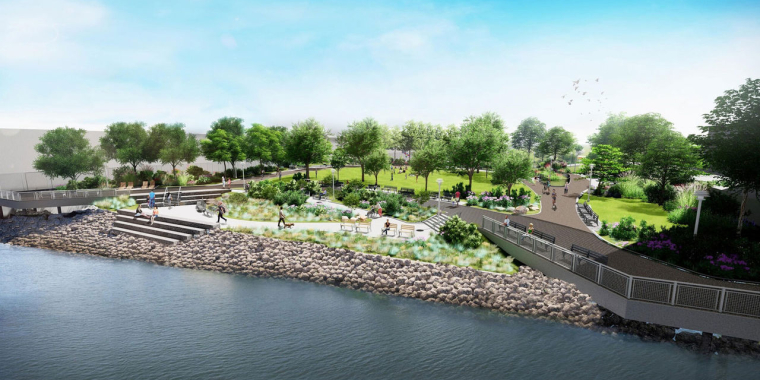
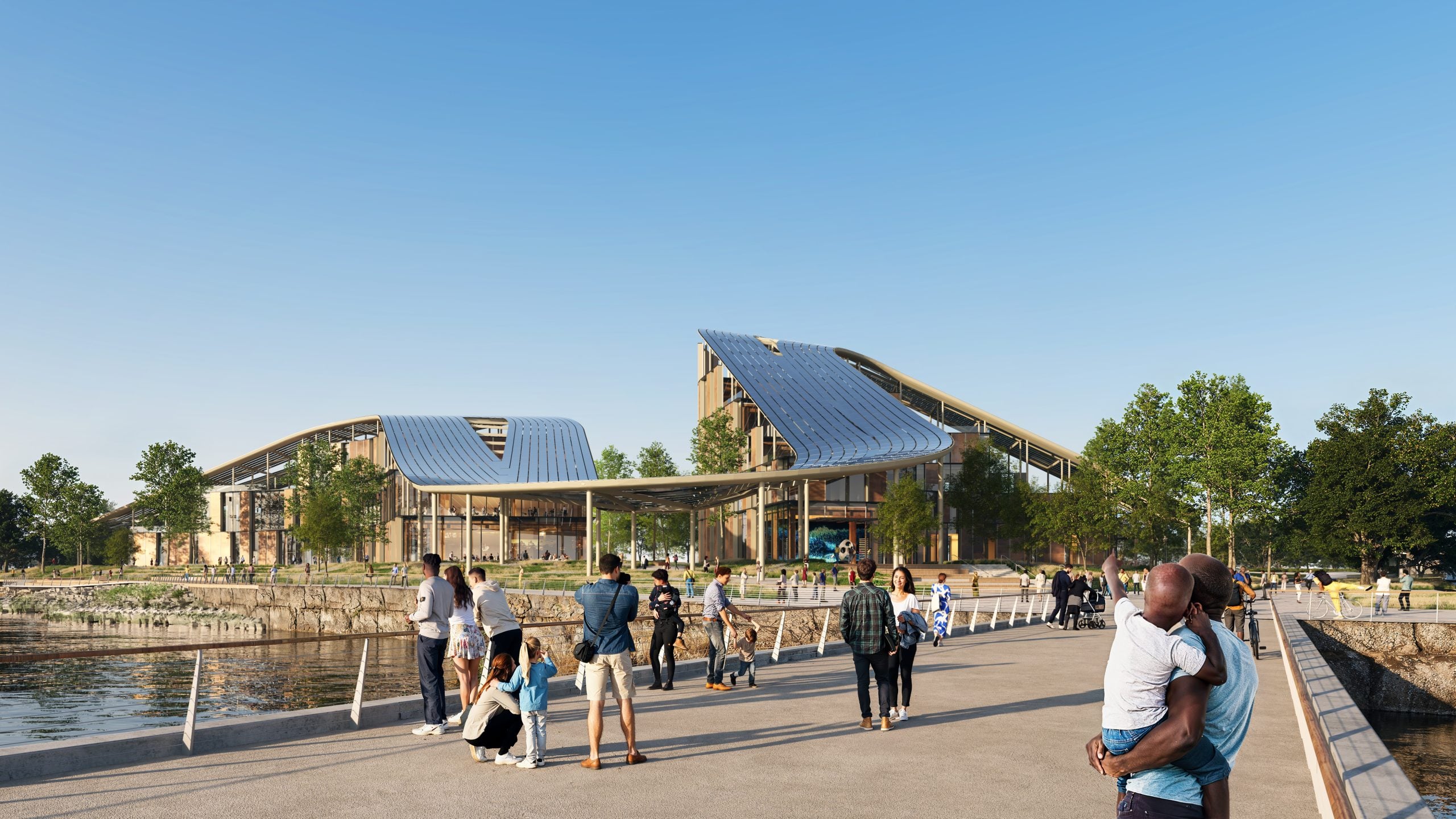
View Renderings from 2025 Cohort
The NYC Mass Timber Studio supports innovative design and development teams working to integrate mass timber, a low-carbon building material alternative to concrete and steel, into the New York City built environment, while navigating regulatory pathways and advancing sustainable construction practices.
Following a successful first cohort, the Mass Timber Studio will support active projects in the early phases of mass timber planning and design for new developments across the five boroughs. Participating teams will receive grants, technical assistance from WoodWorks and advisory feedback from the DOB, FDNY, and the American Institute of Architects New York (AIA). The Mass Timber Studio is funded with the support of the USDA Forest Service and the Softwood Lumber Board. The selected projects for the second cohort include:
- New York Climate Exchange is building a Climate Hub on Governors Island, the largest mass timber commercial project in NYC, totaling more than 140,000 square feet. The new construction portion of the project will house a world class convening space, research labs, and classrooms for a wide range of educational and training programs. The timeline includes construction starting in 2026 and an official opening in Fall 2029.
- Stapleton B4/B5 Residential, which was announced with Mayor Adams in May 2025, will be the largest mass timber residential development in New York City with approximately 500 units, both affordable and market rate.
- Soundview Recreation Center is a new 45,000 square foot recreation center in the Bronx with mass timber structural elements.
- Ganeinu Academy is a 20,000 square foot addition to an existing school in Fresh Meadows, Queens—rebuilt with robust resiliency measures—to repair damage caused by flooding during Hurricane Ida in 2021 and protect against future climate risks.
- Shirley Chisholm Pavilion is a 1,200 square foot open-air pavilion at the southeast corner of Prospect Park—offering respite for parkgoers and a display celebrating Shirley Chisholm’s legacy.
- Dockbuilders Pier is 3,100 square foot building to support Staten Island Ferry operations.
- 5 Timber Houses is five 4-story houses, totaling 20,000 square feet and designed to Passive House standards with geothermal energy in Park Slope, Brooklyn.
These projects will catalyze the deployment of mass timber as a safe, sustainable and more common building practice within New York City. The cohort represents both ground-up construction and additions to existing buildings using innovative wood products.
Studio activities have already begun and will run for nine months, during which time design teams will regularly meet for technical assistance and advisory support.
“Today’s announcement marks another milestone in our city’s commitment to building a thriving green economy, expanding opportunities for all New Yorkers, and leading by example as a global hub for urban sustainability,” said Clare Newman, President and CEO of the Trust for Governors Island. “We congratulate NYCEDC, DOB, and FDNY on this exciting new cohort—including the New York Climate Exchange, opening on Governors Island in 2029—and we look forward to continued collaboration as we work to strengthen New York City’s resilience in the face of climate change.”
“We were so pleased to participate in the Mass Timber Studio's second cohort” said Andrew Winters, Director of Capital Projects, Planning, and Development at The New York Climate Exchange. “It added momentum to our project on Governors Island and demonstrated what’s possible when city agencies work together to advance new and sustainable technologies in the built environment.”
“WoodWorks is proud to partner with the New York City Economic Development Corporation for the Mass Timber Design Studio to accelerate adoption of mass timber products and projects. The Studio aligns closely with our mission to promote efficient, sustainable, and forward-thinking mass timber and light-frame wood building solutions. We look forward to providing technical support to Studio participants to help mass timber projects go forward in New York City,” said Jennifer S. Cover, President and CEO of WoodWorks.
“As part of our Accelerator Cities initiative, the NYC Mass Timber Studio is helping lead the shift toward buildings that reflect both the design aspirations and growing demands of modern cities—without increasing environmental impact. Mass timber opens the door to innovative, efficient, and sustainable construction that meets today’s development needs, setting a higher standard for the future,” said Softwood Lumber Board President and CEO Cees de Jager.
“AIA New York is excited to continue our partnership with EDC in supporting the Mass Timber Studio,” said Jesse Lazar, Executive Director of American Institute of Architects New York Chapter. “As we seek to identify opportunities to transition to a circular economy, promoting climate forward innovative solutions for building in NYC helps move our industry in the right direction, encouraging the use of low-carbon construction materials and reducing embodied carbon.”
Resilient Energy Studio
The Resilient Energy Studio is designed to catalyze the safe deployment of innovative energy storage system (ESS) technologies within the unique, dense environment of New York City by advancing projects with startup technology companies. Each company engages closely with the city agencies including FDNY and DOB to work through the regulatory process for their proposed deployment in one of the five boroughs. The five companies selected for the Resilient Energy Studio are:
- Ashlawn Energy plans to deploy their vanadium redox flow battery in the garage of a 112-unit, 12-story residential building in Brooklyn.
- FlowCellutions will collaborate with Ashlawn Energy to integrate its battery diagnostics platform into their upcoming NYC deployment—providing predictive insights, forecasting degradation, and enabling safer, longer deployments.
- Strobe Power is partnering with a telecommunications site in Staten Island to provide energy asset aggregation and optimization that allows market participation for its hybrid battery backup solution.
- Novele is demonstrating its intelligent battery and demand-management platform at the Brooklyn Navy Yard—as one of the first permitted indoor, building-scale energy storage installations in NYC.
- Moment Energy plans to repurpose EV batteries into a stationary battery energy storage system for a multifamily residential building in the Bronx, providing residents with clean, affordable, and reliable backup power and strengthening the community’s energy resilience.
Energy storage captures and stores electricity for use at a later time. It is critical to decarbonizing NYC’s built environment and a solution that will balance supply and demand by creating a safe, more efficient, and resilient energy grid. These systems are heavily regulated with New York City having some of the strictest safety standards in the country.
“The Brooklyn Navy Yard is proud to be a proving ground for the innovations that will shape a more sustainable and equitable future for New York City. The inclusion of Novele’s pilot at the Navy Yard in EDC’s Resilient Energy Studio reflects our shared commitment to advancing high impact technologies that will improve the lives of New Yorkers. These programs not only accelerate climate solutions, especially via assisting regulatory agencies like DOB and FDNY see new technologies in safe, controlled settings, but also create real economic opportunities for New Yorkers,” said Brooklyn Navy Yard Development Corporation President and CEO Lindsay Greene.
Energy storage technology improves electricity grid efficiency, reduces cost, and improves resiliency. It is particularly important in New York City where aging peaker plants need to be retired and grid upgrade costs are high. NY-BEST applauds NYCEDC Resilient Energy Studio’s new cohort and initiative to overcome unique urban challenges and advance energy storage deployment in New York City,” said William Acker, Executive Director of the New York Battery and Energy Storage Technology Consortium (NY-BEST).
“At Newlab, we believe cities are uniquely positioned to lead the transition toward a more sustainable future. These Studios are accelerating critical technologies while creating new regulatory and implementation pathways that ensure they succeed in real-world urban environments,” said David Belt, CEO and Co-founder of Newlab. “We are proud to collaborate with NYCEDC and our agency partners to support startups and project teams advancing climate solutions across New York City.”
“It’s encouraging to see EDC’s ongoing commitment to reducing barriers for climate solution providers to demonstrate and deploy their technologies across New York State. By bringing together city agencies to support real-world pilot projects, this program not only benefits the participating solutions providers, but also has the potential to unlock new or streamlined pathways that will benefit all companies looking to deploy in New York City,” said Managing Director of the Clean Fight Kate Frucher.
“Participation in the Resilient Energy Studio provides Ashlawn Energy an opportunity to foster partnerships with community organizations, and city agencies. By shifting energy use from peak to off-peak hours, Ashlawn’s water-based non-flammable VanCharg™ vanadium redox flow battery provides buildings with substantial utility and emissions savings while making sustainability safe and financially viable, and enables the city to address its key decarbonization, grid resilience, and equitable climate innovation goals,” said President of Ashlawn Energy Norma Byron.
“New York City is one of the most demanding proving grounds for energy infrastructure in the world. Participating in the Resilient Energy Studio gives us the opportunity to showcase our AI-powered platform; capable of reshaping real-time load profiles across entire buildings, while proving that Novele’s technology meets the highest bar for safety. Our EnergyBoard is purpose-built for the dynamic, distributed demands of urban environments. We’re proud to help define the future of energy inside the built environment, including here at the Brooklyn Navy Yard,” said Charles Conwell, CEO & Co-Founder, Novele.
“We are honored to partner with NYCEDC, the FDNY, and DOB to work towards deploying our battery energy storage technology and showcase its powerful technical benefits for the Bronx community. Our system is designed to increase the efficiency of local solar generation, enhance overall grid stability, and provide critical energy reliability when it's needed most. This project will demonstrate a sustainable, circular path forward for New York's energy infrastructure,” said Gurmesh Sidhu, co-founder and CPO at Moment Energy.
This announcement advances the City’s Green Economy Action Plan, and is a critical component to achieving the City’s carbon reduction targets, including reducing embodied carbon emissions for new buildings, infrastructure, and major retrofits by 50 percent, as mentioned in Mayor Adams’ “PlaNYC: Getting Sustainability Done,” New York City's Strategic Climate Plan.
Companies participating in the Mass Timber and Resilient Energy Studio build on the success past cohorts, including:
- The Walter Gladwin Recreation Center in the Tremont neighborhood of the Bronx has received building permits and is advancing towards construction. The project is a new mass timber facility that brings inclusive and universally accessible fitness amenities and programming for all ages.
- The Brooklyn Public Library New Lots branch will replace an existing library building with a new mass timber facility that will house educational and community programming. The project has successfully received their PDC approval and is working towards permit application submission.
- Algoma, a NYC-based technology startup that participated in the Mass Timber Studio, raised a successful seed round. ‘The Prospect’ is a prototype that aims to provide a repeatable, easily deployable, and scalable solution for the Brooklyn housing market.
- The DOB published its first Technical Bulletin on mass timber—clarifying specific requirements of Section BC 602.4 of the NYC Building Code regarding mass timber construction.
- Through the Resilient Energy Studio, twelve energy storage companies have deployed pilots in NYC, including ElectricFish, who deployed energy storage with EV fast charging at Floyd Bennett Field.
About NYCEDC
New York City Economic Development Corporation is a mission-driven, nonprofit organization that works for a vibrant, inclusive, and globally competitive economy for all New Yorkers. We take a comprehensive approach, through four main strategies: strengthen confidence in NYC as a great place to do business; grow innovative sectors with a focus on equity; build neighborhoods as places to live, learn, work, and play; and deliver sustainable infrastructure for communities and the city's future economy. To learn more about what we do, visit us on Facebook, X, LinkedIn, and Instagram.
About Newlab
Newlab is a venture platform for critical technology startups transforming core industrial sectors. We accelerate commercialization by aligning Infrastructure, Projects, and Capital in strategic geographies. Newlab operates five locations across Brooklyn, Detroit, New Orleans, Montevideo, and Riyadh, and works with over 50 industry and government partners around the world. Newlab has supported over 400 startup companies in raising over $5.8 billion in venture capital, achieving $2.3 billion in exits, and reaching a collective valuation of over $20 billion.